About Us
Our AI-driven greenhouse, in action
Our Story
From Mae Win subdistrict to a repeatable model
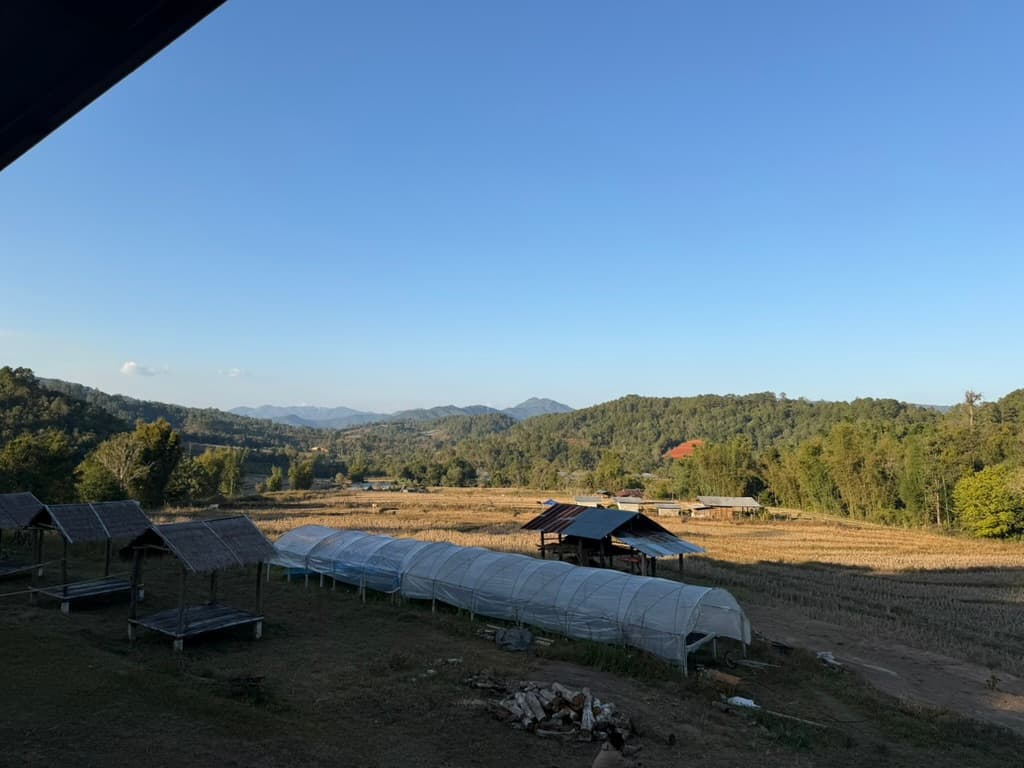
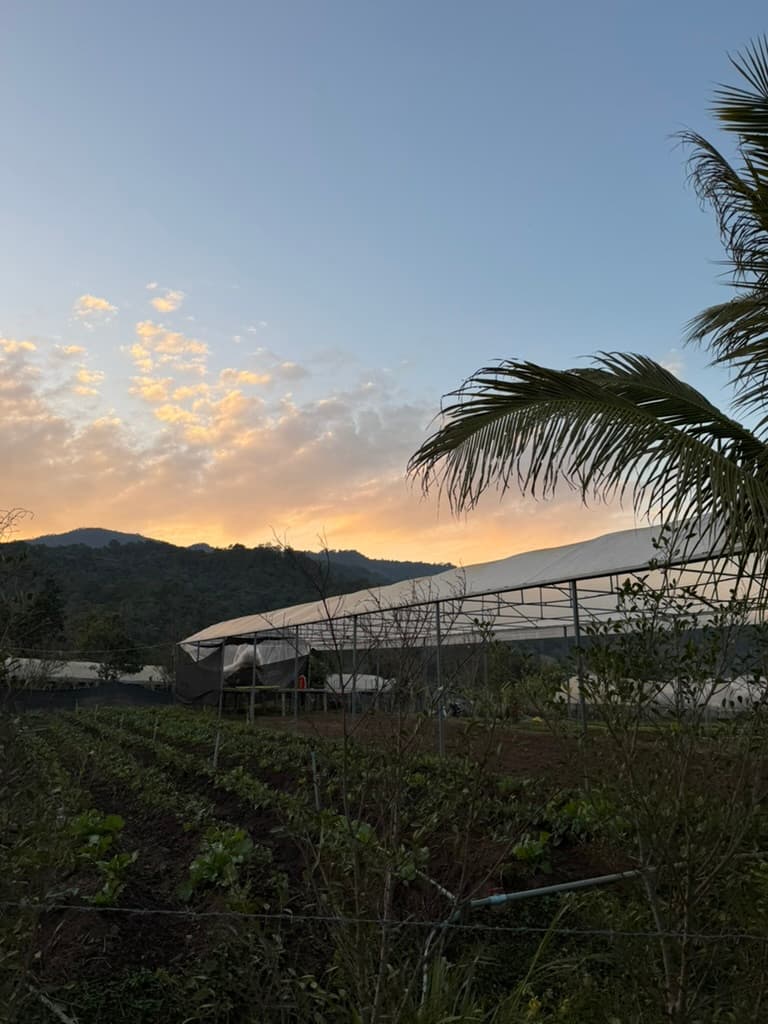
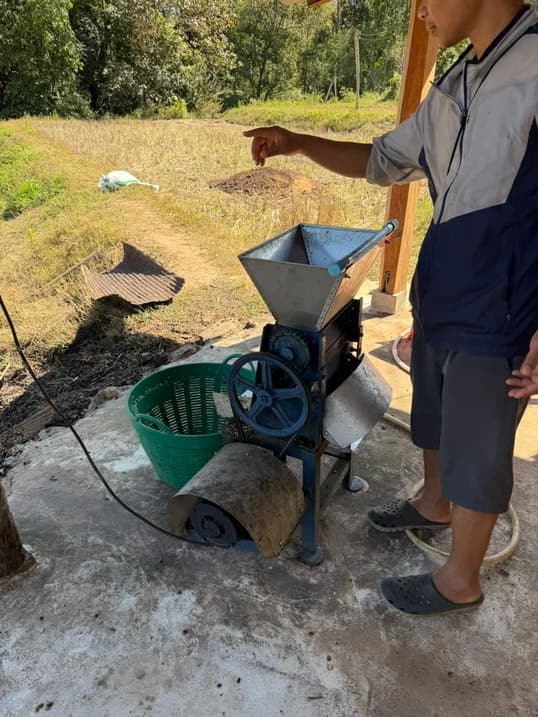
Our pilot site sits in Mae Win subdistrict, Mae Wang district, Chiang Mai — a region where villages grow and process large volumes of coffee, tend kitchen gardens that supply vegetables like lettuce and tomatoes to nearby buyers, and cultivate rice across nearly every available plot.
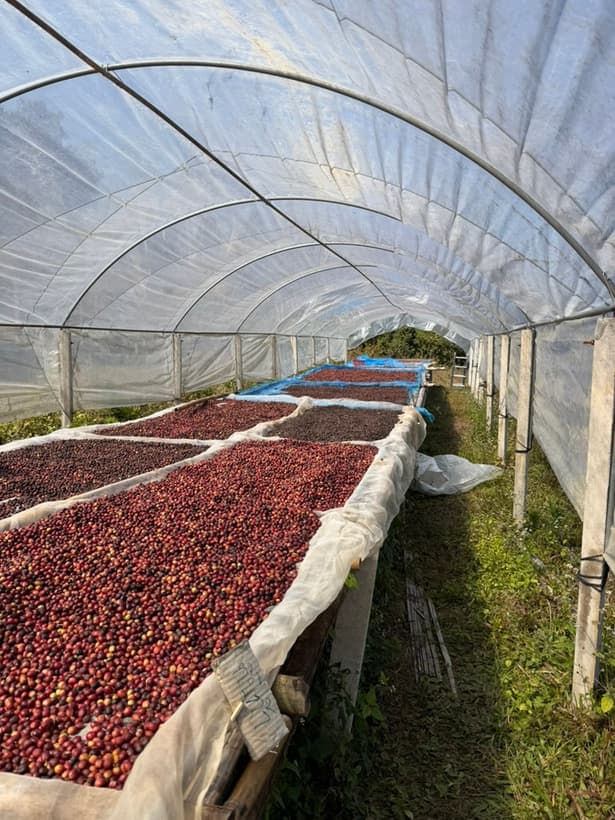
Many villages already use semi-greenhouse structures to dry their coffee harvest. But as rainfall grows more erratic, that manual, unpowered approach is no longer enough — beans and grain are spoiling before they can dry, and too much land is being used inefficiently just to hedge against the weather.
We are currently researching and field-testing the system with two science faculty at Amnuay Silpa School before scaling it to more villages.
The System
One greenhouse. Two modes. Switched automatically.
An Arduino-based controller reads eight sensors in real time and drives six actuators — switching seamlessly between growing crops and drying harvested produce.
Full climate control for year-round vegetable and specialty crop cultivation inside the greenhouse.
- Automated irrigation triggered by configurable soil moisture thresholds
- Humidity regulation via ultrasonic mist system and exhaust fans
- Temperature management — fans cool, ceramic heater warms cold nights
- Scheduled grow-light photoperiod cycles (e.g. 16h on / 8h off) via real-time clock
- AI crop recommendations generated from multi-sensor readings
- Weather-API integration — pre-emptive action before forecast rain or frost
Real Scenarios
What the AI actually decides, minute by minute
Heat Spike Response
At 13:30 the sensors read 38°C against a 32°C threshold. Exhaust fans and the mist system kick in immediately — the LCD shows “TEMP HIGH — Cooling ON.” Twelve minutes later the greenhouse has settled back to 29°C.
Pre-Emptive Rain Response
A 06:00 weather check forecasts heavy rain by 14:00. By 11:00 the system pre-warms the greenhouse, suspends the midday irrigation cycle, and closes ventilation to retain heat — all before the first drop falls.
Coffee Bean Drying Cycle
Freshly wet-processed Arabica beans go in at 45% moisture. The system holds 45°C with fans at full speed, recalculating every 30 minutes. The LCD reads “Est. 18h remaining” — and drops to a gentle hold once 11% is reached.
Paddy Rice Drying
Post-harvest rice arrives at 24% moisture. Fans cycle 20 minutes on, 20 off — mimicking traditional sun-drying turning — capped at 40°C to protect the grain. Final reading: 13.8%, safely inside storage range.
Night Frost Alert
At 04:00 a forecast flags frost risk for 05:30. The heater ramps to full power, the buzzer sounds, and the LCD displays “FROST RISK — Heater at max — Check greenhouse” — hours before it would otherwise reach the crop.
Built Frugally
Roughly a third of the cost of a commercial smart greenhouse
We use readily available sensors and an Arduino Mega controller rather than proprietary hardware — keeping the full bill of materials affordable enough for a single farming household to eventually own.
Sensors
- DHT22Air temperature & humidity
- Capacitive Soil Moisture SensorSoil water content
- BH1750 Light SensorAmbient light level
- Rain SensorActive rainfall detection
- DS18B20 (waterproof)Soil temperature
- DS3231 RTCReal-time clock for scheduling
- 20×4 LCD + KeypadFarmer-facing control panel
- ESP8266 / ESP32WiFi, weather & AI advisory API
Actuators
- Sprinkler / Drip IrrigationAutomated watering
- Exhaust Fans ×2Cooling & airflow
- Ultrasonic Mist MakerHumidity control
- Ceramic HeaterCold-night & drying warmth
- LED Grow LightsSupplemental photosynthesis light
- Water PumpIrrigation line supply
On Site
Mae Win, Chiang Mai
Roadmap
From plan to first sale
10–16 May 2026
Design Finalized
System architecture, wiring plan, and component sourcing confirmed for the Mae Wang pilot site.
18–21 June 2026
On-Site Build
The team traveled to Mae Win subdistrict to construct and install the first AI-driven greenhouse.
22 June 2026 onward
First Sales Begin
Coffee, produce, and local textiles go on sale online and at pop-up booths from Chiang Mai — proceeds fund the next build.